Existential Realism understands temporal reality as having two levels. The first is existence: what is concretely instantiated in the present. Only present entities, events, and processes exist. The second is the broader domain of reality. It includes not only what presently exists, but also past facts and objectively grounded future possibilities. The past is real because it actually happened. The future is real as an open field of possibilities structured by present conditions, probabilities, and decisions. Existence is therefore a present form of reality, but it is not identical with reality as a whole. This two-level ontology provides a new framework for questions concerning memory, causation, change, probability, responsibility, and modern physics.

Existential Realism
A new way to understand time and reality: the past remains effective through its traces, the future is open as possibility, and only the present exists.
A New Lens on Time
Time is not merely what clocks measure. It concerns how change occurs and how we understand the world.
Philosophy of time is often presented as a choice between two positions. Presentism holds that only the present exists. Eternalism, by contrast, treats past, present, and future as equally existing parts of a four-dimensional block.
Existential Realism proposes a two-level ontology of time: only the present exists, yet the broader domain of reality extends beyond what presently exists.
The past no longer exists. Yet it was real, and past events continue to affect the present through causes, consequences, records, and memories. The future does not yet exist. Yet future possibilities are real insofar as they are opened, constrained, or made more probable by present conditions. ER therefore combines a dynamic present with a reality that extends beyond whatever exists at this moment.

Why This Matters for Us
ER connects our immediate experience of time with fundamental questions about truth, change, and responsibility.
We do not experience the world as a completed block of time. We remember what has happened, act in the present, and direct our decisions toward a future that remains open.
Existential Realism takes this structure seriously. Memories and present traces connect us with past events without requiring those events to continue existing. Our decisions matter because they influence which of the presently possible futures will actually occur.
The present is therefore not merely a fleeting point between past and future. It is where possibilities become facts, where change occurs, and where new reality emerges.
ER offers a framework for considering personal experience, scientific knowledge, and philosophical questions together — without excluding the past from reality or treating the future as already fixed.

Simple Examples
ER is not only an abstract theory. Its basic structure is already present throughout everyday life.
- Dinosaurs no longer exist. They were nevertheless real. Fossils and geological traces allow us to know about their past existence.
- A past birthday no longer exists. The event was nevertheless real. Memories, photographs, and its consequences may continue into the present.
- A particular climate future does not yet exist. Different developments are nevertheless real possibilities. Present conditions and decisions influence which of them can occur.
These examples illustrate ER’s central idea: Something does not need to exist in the present in order to belong to reality. Past and future, however, are not real in the same way. The past consists of what actually happened. The future consists of what may become actual under present conditions. This allows us to distinguish more carefully between truth, memory, causation, possibility, and responsibility.

Traces of Time
I Have Written Two Books About ER
Two approaches — one shared philosophical framework.
Time Explained is the best place to begin for readers who are new to philosophical and scientific questions about time. It provides an accessible overview of major views of time and introduces Existential Realism without requiring prior philosophical knowledge.
The book shows why our familiar ideas about past, present, and future are less self-evident than they appear and how familiar questions can be approached from a new perspective.
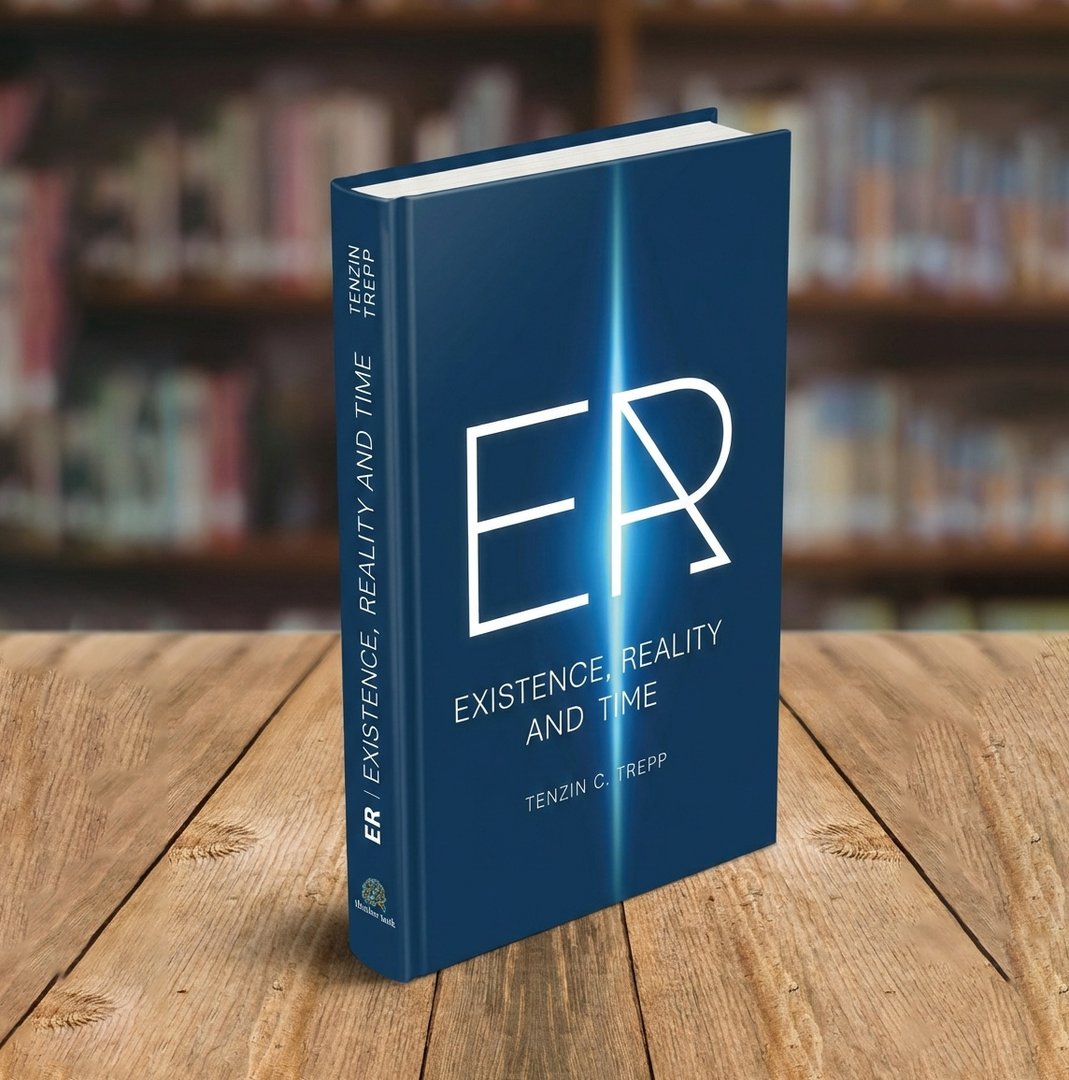
ER: Existence, Reality and Time continues and deepens the investigation. It develops Existential Realism systematically and examines its implications for philosophy, physics, causation, probability, and cognition.
It is intended for readers who want to follow the arguments in greater detail, examine possible objections, and explore the relationship between existence, reality, and time more rigorously.
If Time Explained opens the door, ER: Existence, Reality and Time leads further into the conceptual space beyond it.